01 From a Road to a Garden
In 2025, NAU-CHINA initiated Into China, Into iGEM (ICII) with the theme of "The Modern Silk Road of
Synthetic Biology", inviting 14 iGEM teams from 11 cities to participate. Projects, regional cultures,
and scientific stories unfolded along the map, making the ancient route of communication a new bond
connecting traditional wisdom with modern synthetic biology.
In 2026, we hope to push this connection forward. Roads allow people far apart to reach each other, but
gardens allow those who arrive to truly meet: they stay, observe, exchange experiences in different
spaces, and collectively change the landscape before them. Therefore, this year's ICII is no longer just
a project exhibition, but a "Garden of Condensation" jointly built and continuously grown by different
teams.
02 What is ICII?
ICII stands for Into China, Into iGEM. It is an invitation to approach Chinese culture and the iGEM
community, as well as a collaboration platform crossing geographical, linguistic, and disciplinary
boundaries. We invite iGEM teams from different countries and regions to retell their synthetic biology
projects from a cultural perspective, finding connections among each other's scientific problems,
technical modules, social issues, and educational practices.
Here, culture is not an add-on decoration outside of science, but a language to understand complex
technologies; projects are not isolated exhibits, but open questions that can be responded to,
referenced, and collectively perfected.
03 Why a Chinese Garden?
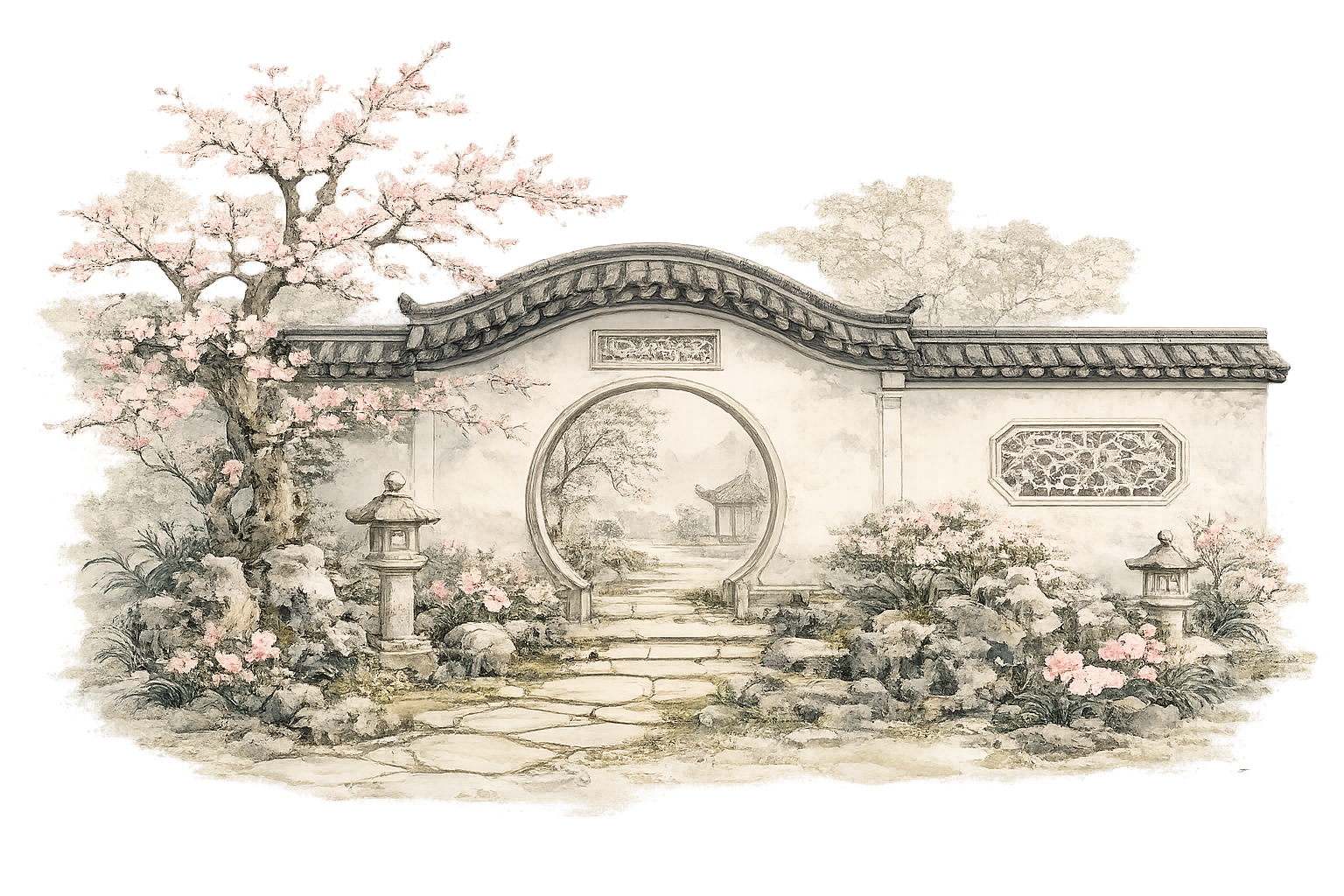
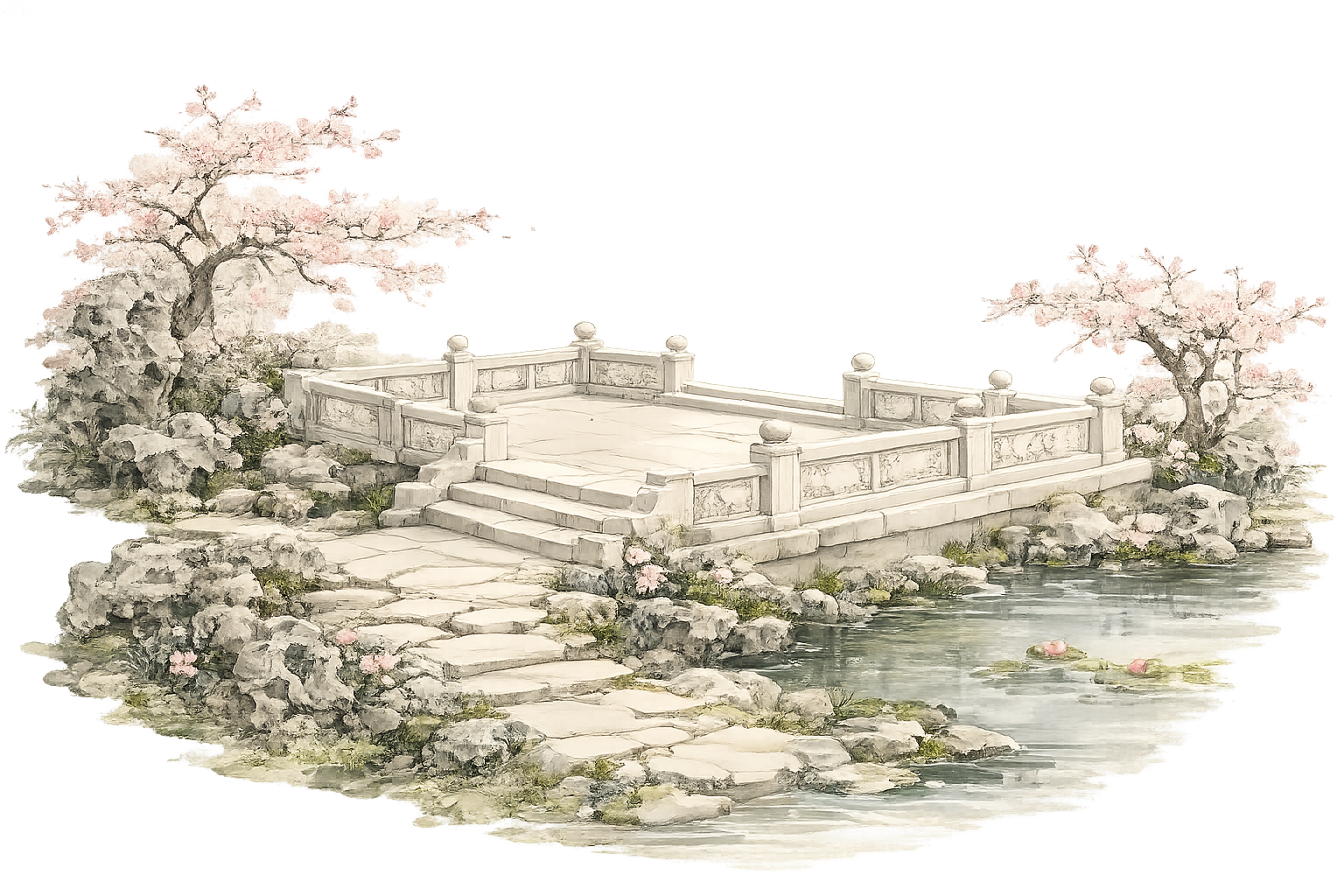
Chinese gardens never rely on completely enclosed spaces to establish order. Courtyards divide functions,
latticed windows preserve sightlines, corridors connect paths, and water systems convey changes. It
emphasizes being "separated but not disconnected, bounded but not closed": every scene has its own
boundary but constantly interacts with the surrounding environment; with every step a visitor takes, the
view changes accordingly.
This spatial wisdom cleverly corresponds to the liquid-liquid phase separation studied by CellApp.
Biomolecules can aggregate into condensates with specific functions without membrane structures;
different condensates remain relatively independent while exchanging matter and information with the
surrounding environment; signals such as light, temperature, and pH can also alter their formation,
dissociation, and function. The garden thus provides not only a visual theme but also an intuitive
language for understanding "boundless yet defined" cellular compartments.
04 Science in the Garden
Courtyard: Boundless yet Defined Functional Spaces
Courtyards form order through boundaries without completely isolating the inside from the
outside. This corresponds to membraneless compartmentalization: specific molecules locally
enrich in cells, improving the organization and efficiency of reactions while maintaining
exchange capabilities.
Pavilion: Mutually Orthogonal Functional Modules
Different pavilions have unique uses and styles, neither replacing nor interfering with each
other. They correspond to the orthogonal condensates in CellApp that undertake different tasks,
allowing multiple functions to run in parallel within the same cell.
Latticed Window: Information Exchange Across Boundaries
A latticed window demarcates space while bringing another scene into view. It symbolizes
observation, questioning, and inspiration between teams, and also corresponds to the selective
matter and information exchange between condensates and the surrounding environment.
Corridor: Continuous Collaboration Paths
Corridors connect scattered spaces, making an encounter a path that can be continued. It
corresponds to team pairing, problem exchange, module discussion, and joint creation in ICII.
Four Seasons: Dynamic Changes Responding to the Environment
Gardens change with light, shadows, temperature, and seasons. CellApp similarly uses signals like
light, temperature, and pH to regulate the aggregation and dissociation of condensates, enabling
functional spaces within the cell to form, disappear, or recombine on demand.
05 What Kind of Garden Do We Want to Build?
We look forward to a shared space that does not erase differences. Every team can retain its regional
culture, project language, and research focus, while creating new value from these differences through
collaboration. ICII 2026 hopes to achieve three things:
- Enable the public to understand synthetic biology through cultural imagery, and allow teams to
discover new possibilities through mutual observation.
- Make culture an entry point for understanding science, not an attached label. Let every team be seen
and see others.
- Keep the platform expandable, reserving new entrances for future teams.